 Instagram
 Facebook
 Whatsapp
 Youtube
 Contact

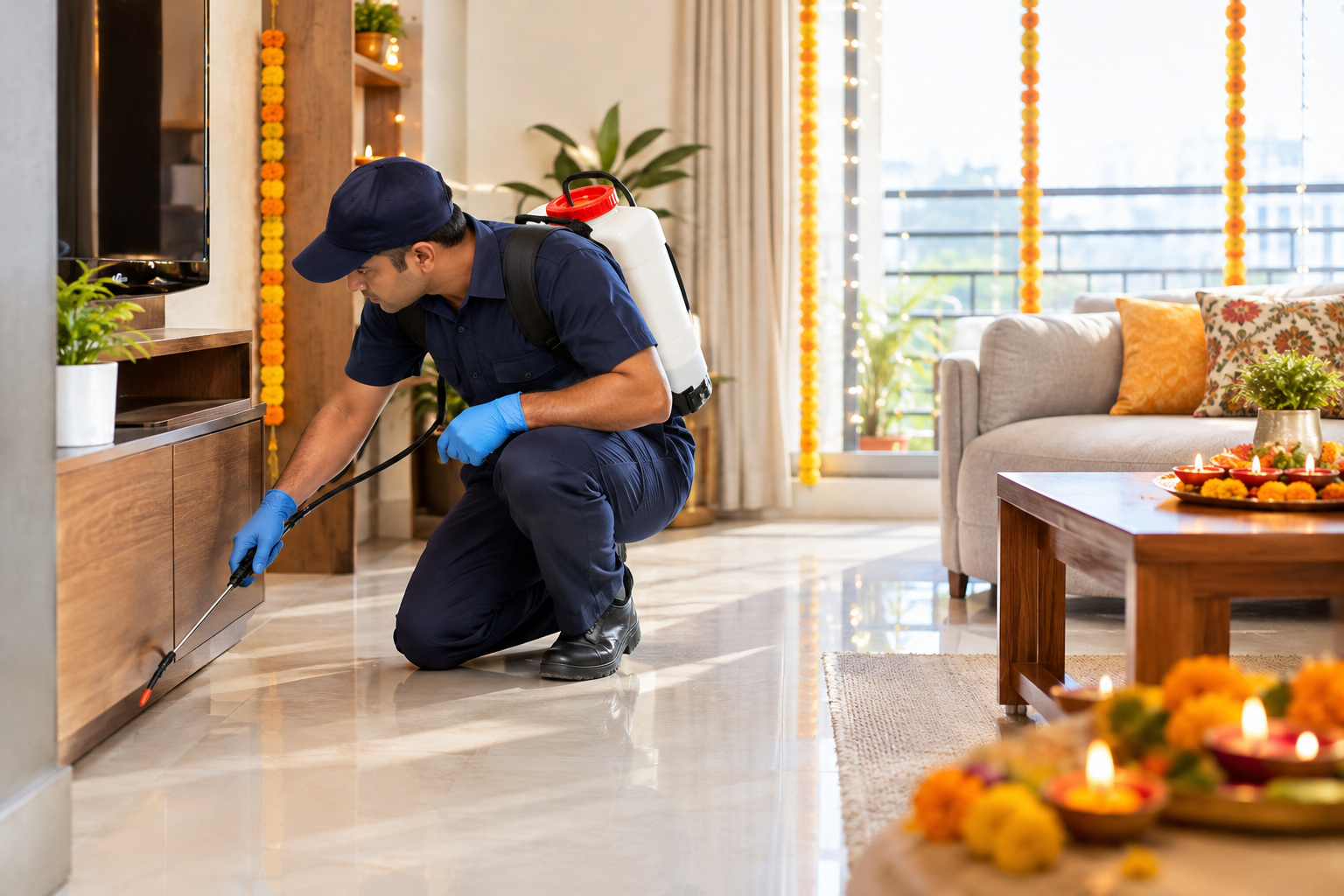
Festival cleaning helps remove accumulated dust, unused belongings, and food residues. However, cleaning alone may not eliminate pests that are nesting inside wall cracks, drains, wooden structures, or inaccessible storage areas.
Pre-Diwali pest control focuses on identifying these risks and addressing them before guests arrive and festive activities become busy.
Here are some important reasons to consider pest control before Diwali:
- Improved household hygiene: Cockroaches, rodents, and flies can contaminate food preparation areas and surfaces.
- Protection against property damage: Termites and rodents may damage wooden furniture, stored belongings, wiring, and other materials.
- Prevention of recurring infestations: Identifying entry points and nesting areas can help reduce the chances of pests returning.
- Better preparation for guests: A pest inspection helps address potential problems in guest bedrooms, kitchens, bathrooms, and living areas.
- Early detection of hidden pests: Professional inspections can identify signs of infestation that routine cleaning may not reveal.
Planning pest control before the festival also gives you time to follow any necessary treatment precautions before decorating your home or preparing food.
Common Household Pests to Check During Diwali Cleaning
Different pests are attracted to different conditions. During festive cleaning, pay particular attention to the following areas.
1. Cockroaches in Kitchens and Storage Areas
Cockroaches commonly hide behind refrigerators, beneath sinks, inside cabinets, and near drains. Food crumbs, moisture, and poorly sealed storage containers can attract them.
While cleaning your kitchen, inspect dark corners, remove grease deposits, repair leaking taps, and store groceries in sealed containers. If you notice repeated sightings, droppings, or egg cases, professional cockroach control may be necessary.
2. Ants Around Sweets and Food Ingredients
Sugar, jaggery, flour, dry fruits, and other festive ingredients can attract ants. Even small food spills may create a continuing source of attraction.
Keep sweets covered, clean food preparation surfaces promptly, and avoid leaving food uncovered overnight. Seal visible gaps around windows and doors where ants may enter.
3. Termites in Wooden Furniture and Door Frames
Termites can remain unnoticed until damage becomes visible. Wooden cupboards, door frames, furniture, and other susceptible materials should be inspected for mud tubes, hollow-sounding wood, discarded wings, or damaged surfaces.
If you notice these warning signs, arrange a professional termite inspection. Ordinary household cleaning products are not a reliable solution for an established termite infestation.
4. Rodents in Store Rooms and Kitchens
Stored decorations, cardboard boxes, unused furniture, and food supplies can create hiding places for rodents. Rats and mice may also enter through gaps around pipes, doors, and utility openings.
Look for droppings, gnaw marks, damaged packaging, or scratching sounds. Store food securely, reduce clutter, and seal suitable entry points. Suspected rodent activity near electrical wiring should be addressed promptly.
5. Mosquitoes Around Water-Collecting Areas
Water collected in plant trays, buckets, coolers, containers, and other outdoor or indoor areas can provide mosquito breeding opportunities.
Empty unnecessary standing water, clean water containers regularly, and check less visible areas such as balconies, terraces, and drains. Professional mosquito control may be appropriate when mosquito activity remains high despite preventive measures.
Pre-Diwali Home Cleaning and Pest Control Checklist
Before decorating your home, use this checklist to address common pest risks.
- Remove unnecessary cardboard boxes, newspapers, and clutter from storage rooms.
- Clean kitchen cabinets, shelves, and spaces behind appliances.
- Store sweets, dry fruits, grains, and other ingredients in sealed containers.
- Check under sinks and around bathrooms for moisture or plumbing leaks.
- Inspect wooden furniture and door frames for signs of termite damage.
- Check windows, doors, utility openings, and pipe entry points for gaps.
- Remove stagnant water from plant trays, buckets, and unused containers.
- Inspect guest rooms, cupboards, and rarely used spaces.
- Arrange professional pest control if you find signs of an active infestation.
- Follow all treatment-specific safety instructions before resuming normal household activities.
Completing these tasks before the busiest days of the festival can help you manage potential pest problems more effectively.
Is Home Cleaning Enough to Prevent Pests Before Diwali?
Regular cleaning is an important part of pest prevention, but it may not be enough when pests have already established nests or colonies.
For example, wiping a kitchen counter may remove food residue without eliminating cockroach hiding places. Similarly, cleaning a wooden cupboard will not resolve a termite infestation inside the structure.
The right approach depends on the type of pest, the extent of the infestation, and the conditions attracting it.
Home cleaning is generally useful for:
- Removing food crumbs and spills.
- Reducing clutter and hiding places.
- Improving food storage practices.
- Eliminating unnecessary standing water.
- Identifying visible signs of pest activity.
Professional pest control may be needed for:
- Persistent cockroach or ant infestations.
- Suspected termite activity in wooden structures.
- Repeated rodent sightings or signs of nesting.
- Ongoing mosquito problems that require targeted treatment.
- Pest activity that continues despite appropriate preventive measures.
A professional inspection can help determine which treatment, if any, is suitable for your home.
When Should You Schedule Pest Control Before Diwali?
Ideally, plan your pest inspection before the final round of festive cleaning and decoration. The appropriate timing depends on the treatment method, the pest involved, and the condition of your property.
For routine preventive work, contact a pest control provider in advance to discuss available appointments and preparation requirements. If an active infestation is already present, avoid delaying an inspection until the last day before the celebrations.
After treatment, follow the provider's instructions regarding ventilation, cleaning, food preparation, and when people or pets can safely re-enter treated areas. Some treatments may require additional precautions or follow-up visits.
Advance planning allows you to complete any required cleaning and safety steps without disrupting your festive preparations.
Why Choose Professional Pest Control Before the Festive Season?
Professional pest control can help homeowners identify the source of an infestation and choose an appropriate response instead of relying on repeated, unplanned applications of household pesticides.
A suitable service may include an inspection of pest-prone areas, identification of entry points, recommendations for sanitation and exclusion, and targeted treatment where necessary.
When selecting a pest control provider, consider the following:
- Experience in treating the specific pest affecting your home.
- Clear information about the proposed treatment and its limitations.
- Transparent pricing and details of any follow-up visits.
- Appropriate product use and clear safety instructions.
- Recommendations for preventing future pest activity.
PCS Pest Control can be considered when planning your pre-Diwali pest prevention requirements. Discuss your property's specific concerns with the service provider so the recommended approach matches the pest problem and your household's needs.
Make Pest Prevention Part of Your Diwali Preparations
Diwali cleaning is an opportunity to do more than refresh your home's appearance. It also provides an opportunity to inspect hidden corners, remove potential pest attractants, identify entry points, and address developing infestations before the festivities begin.
From checking kitchen cabinets for cockroaches to inspecting wooden furniture for termite damage, a few preventive steps can help you prepare your home more thoroughly. Where signs of infestation appear, timely professional advice can help you choose the right course of action.
Make pre-Diwali pest control part of your home cleaning checklist with PCS Pest Control. A clean, well-maintained, and pest-aware home is a better starting point for welcoming family and friends during the festive season.
Frequently Asked Questions
1. Why should pest control be done before Diwali?
Pre-Diwali pest control can help identify and address pest activity before festive cooking, decorating, and family gatherings begin. It also gives homeowners time to follow any required treatment precautions.
2. Which pests should I check for before Diwali?
Common pests to check for include cockroaches, ants, termites, rats, mice, and mosquitoes. The main concerns depend on your property's condition, surrounding environment, and previous pest problems.
3. Is pest control necessary if my house looks clean?
Not necessarily in every home, but visible cleanliness does not guarantee that hidden infestations are absent. If you notice droppings, damaged wood, repeated pest sightings, or other warning signs, consider a professional inspection.
4. How early should I book pre-Diwali pest control?
Contact a provider in advance of your planned cleaning and decoration schedule. The ideal treatment date depends on the pest, treatment method, availability, and any required waiting or cleaning period.
5. Is professional pest control safe for children and pets?
Safety depends on the products used, how they are applied, and the exposure conditions. Inform your provider about children, pets, and anyone with particular sensitivities. Follow the product label and the provider's instructions about access to treated areas.
6. Can I clean my home immediately after pest control treatment?
It depends on the treatment and the surfaces involved. Cleaning too soon may interfere with some treatments. Ask your provider which areas can be cleaned and when it is appropriate to do so.
7. Does pre-Diwali pest control prevent pests permanently?
No treatment can guarantee permanent prevention. Results depend on the pest, the property, sanitation, entry points, surrounding conditions, and whether follow-up treatment is required. Ongoing maintenance helps reduce the risk of recurring infestations.