 Instagram
 Facebook
 Whatsapp
 Youtube
 Contact
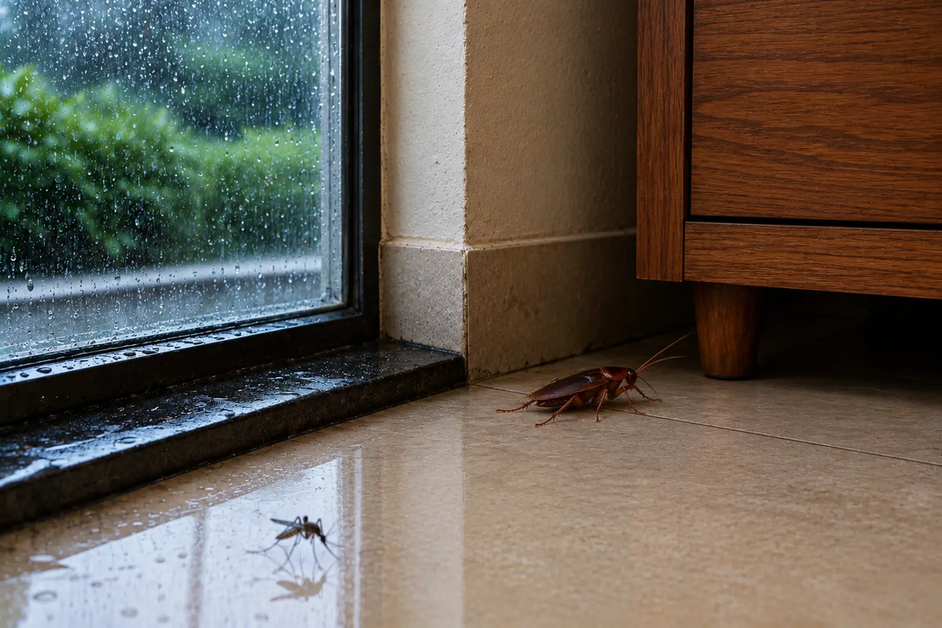
Rain changes the environment around your property. Flooded soil can destroy underground pest nests and hiding areas.
As a result, pests search for safer and drier locations. Small cracks, drains, vents, and gaps become potential entry points.
Moreover, moisture creates favorable conditions for several insects. Cockroaches, mosquitoes, ants, termites, and flies may become more active.
Rodents can also move indoors when outdoor nesting areas become wet. Therefore, post-rain pest prevention deserves immediate attention.
1. Increased Cockroach Activity
Cockroaches often seek dry areas after heavy rainfall. Kitchens, bathrooms, drains, and storage spaces can become common hiding spots.
You may notice cockroaches during the day or evening. Their sudden appearance can indicate increased activity nearby.
Additionally, cockroaches can enter through drainage systems and small structural gaps. Therefore, sealing entry points can reduce future problems.
Professional cockroach control can also address hidden colonies effectively.
2. More Mosquitoes Around Your Property
Standing water creates excellent breeding conditions for mosquitoes. Even small containers can collect enough water for mosquito breeding.
Check plant pots, buckets, drains, rooftops, and outdoor containers after rainfall.
Furthermore, clogged gutters can hold stagnant water for several days. Regularly removing standing water helps reduce mosquito breeding areas.
However, persistent mosquito activity may require professional mosquito control treatment.
3. Ants Suddenly Entering Your Home
Heavy rain can disturb underground ant colonies. Therefore, ants may move indoors while searching for shelter and food.
You may notice trails near windows, doors, walls, or kitchen counters.
Small cracks around doors and windows can provide easy entry routes. Keep food containers sealed and clean spills quickly.
If ant activity continues, professional ant control can help identify the source.
4. Termite Activity After Rainfall
Moisture can create favorable conditions for termite activity. Damp soil and wooden structures may become particularly vulnerable.
Watch for mud tubes, damaged wood, discarded wings, or hollow-sounding timber.
Additionally, moisture around foundations can increase termite-related risks. Therefore, regular inspections can help detect hidden damage early.
Professional termite control remains important when signs appear repeatedly.
5. More Flies Around Doors and Windows
Rain can increase organic moisture and create temporary breeding areas. Consequently, flies may become more noticeable around homes and businesses.
Garbage areas, drains, food waste, and damp organic materials can attract flies.
Keep waste bins covered and clean outdoor drainage areas regularly.
Moreover, proper sanitation can reduce conditions that encourage fly activity.
6. Rodent Droppings Inside Your Property
Rodents often seek dry shelter during heavy rainfall. Therefore, they may enter through surprisingly small openings.
Look for droppings near cabinets, storage rooms, kitchens, and utility areas.
You may also hear scratching sounds behind walls or ceilings. Gnaw marks on wires, wood, or packaging can provide additional clues.
Seal entry points and remove accessible food sources quickly.
7. Damp Areas Becoming Pest Hotspots
Persistent moisture can make certain areas more attractive to pests. Bathrooms, basements, kitchens, and storage spaces deserve special attention.
Fix leaking pipes and improve ventilation wherever possible.
Also, inspect areas behind furniture and appliances. Hidden moisture can remain unnoticed while supporting pest activity.
How to Prevent Post-Rain Pest Infestations
Prevention should begin immediately after heavy rainfall. First, remove standing water around your property.
Next, clean drains and gutters regularly. Then, inspect doors, windows, walls, and foundations for gaps.
Keep food stored in sealed containers. Additionally, dispose of household waste regularly.
Maintain dry storage areas and repair plumbing leaks promptly. Finally, schedule professional inspections when pest activity continues.
When Should You Call a Pest Control Professional?
One or two insects may not always indicate a major infestation. However, repeated sightings deserve attention.
Contact a professional when you notice frequent pest activity. You should also act when droppings, nests, damage, or unusual odors appear.
Early treatment can help prevent pests from spreading throughout your property.
Moreover, professionals can identify hidden infestation sources that homeowners may overlook.
Final Thoughts
Heavy rainfall can quickly change pest behavior. Consequently, pests may move toward homes and businesses searching for shelter.
By watching for early warning signs, you can respond before the problem becomes serious.
Keep your property dry, clean, and properly sealed. Most importantly, do not ignore repeated pest activity.
Early pest control can protect your property, reduce damage, and provide greater peace of mind.