 Instagram
 Facebook
 Whatsapp
 Youtube
 Contact

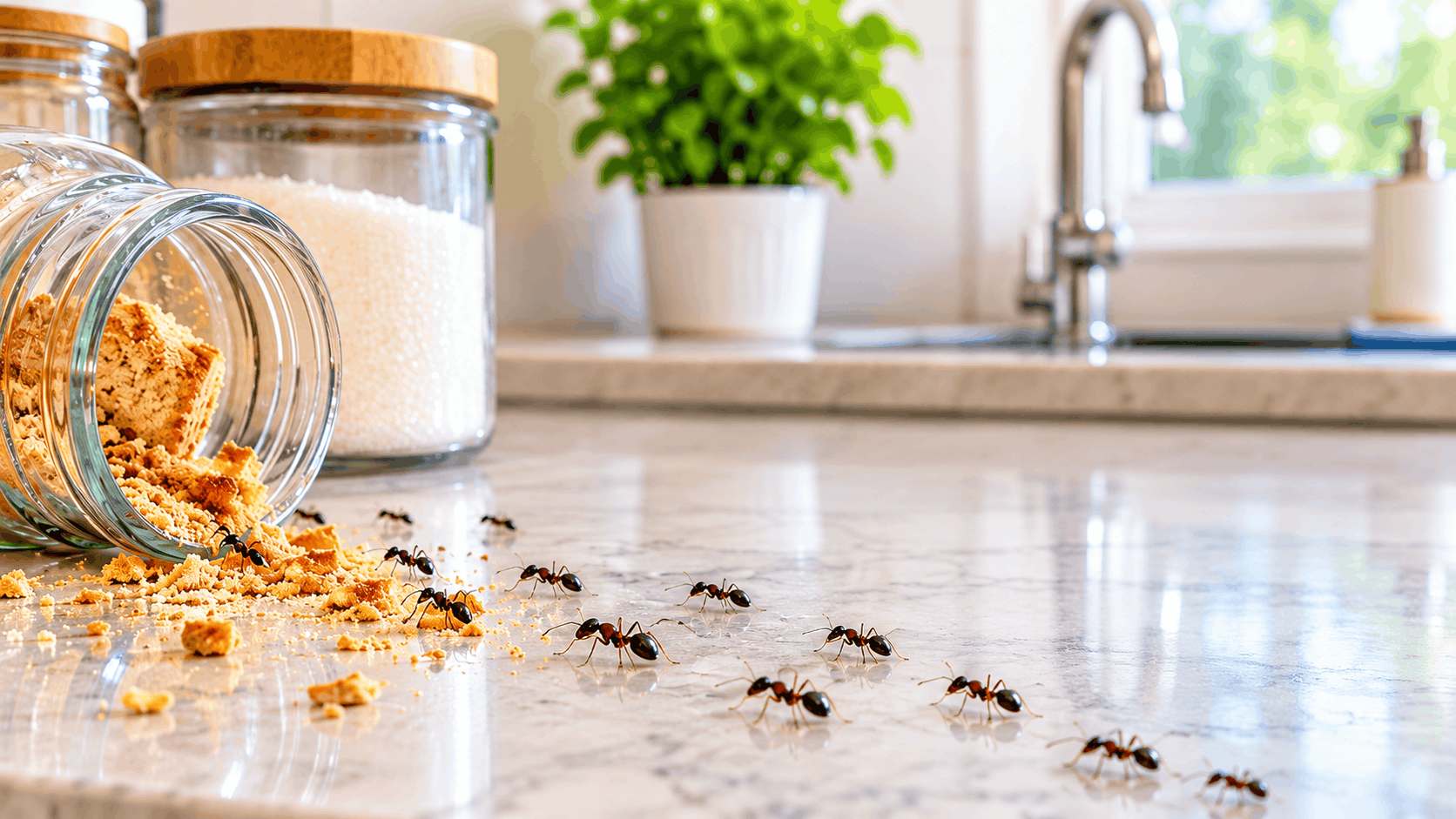
Why Do Ants Suddenly Appear in Your Kitchen?
Ants enter kitchens mainly in search of food, water and shelter. Some common reasons include:
1. Food Crumbs and Spills
Small food particles, sugar spills, fruit residues and leftover meals can attract ants. Even tiny crumbs around countertops, dining areas and kitchen cabinets can become a food source.
2. Moisture and Water Sources
Leaking pipes, wet sinks, damp cabinets and standing water can attract ants. Areas beneath kitchen sinks and around drainage openings are common places to check.
3. Small Cracks and Entry Points
Ants can enter through small gaps around windows, doors, plumbing pipes, wall corners and kitchen tiles. Once a few ants discover an entry point, others may follow the same route.
4. Seasonal Weather Changes
Changes in temperature and rainfall can influence ant activity. During heavy rainfall, some outdoor ants move towards dry and sheltered indoor spaces in search of protection.
5. Nearby Ant Colonies
Ant colonies may exist near your property, inside wall cavities, beneath flooring, in gardens or around building foundations. Worker ants can enter your kitchen when they discover accessible food and water.
How to Stop Ants from Entering Your Kitchen
Getting rid of ants requires more than removing the visible insects. You must also address the conditions attracting them.
1. Keep Kitchen Surfaces Clean
Clean countertops, dining tables and kitchen floors regularly. Remove food crumbs, grease and sugary spills immediately. Pay attention to areas beneath refrigerators, gas stoves and kitchen cabinets.
2. Store Food in Airtight Containers
Keep sugar, flour, cereals, snacks and other food items in tightly sealed containers. Avoid leaving uncovered food on countertops overnight.
3. Remove Moisture and Repair Leaks
Check kitchen sinks, water pipes and drainage areas for leaks. Keep wet surfaces dry and prevent water from collecting beneath cabinets.
4. Seal Cracks and Entry Points
Look for ant trails around windows, doors, plumbing connections and wall cracks. Seal suitable openings to reduce entry points and prevent further ant activity.
5. Use Suitable Ant Control Treatments
Ant baits and other appropriate pest control products can help manage ant activity. The correct treatment depends on the ant species and infestation location. Always follow product instructions and keep pesticides away from children, pets and food preparation surfaces.
Why Do Ants Keep Coming Back After Cleaning?
If ants continue appearing despite regular cleaning, the underlying infestation may not have been addressed.
Some common reasons include:
- The ant colony is located inside walls, flooring or nearby outdoor areas.
- Food and moisture sources remain accessible.
- Entry points have not been properly sealed.
- Chemical trails continue attracting other worker ants.
- The treatment used does not effectively target the colony.
In such situations, professional ant pest control can help identify the source of the infestation and determine an appropriate treatment approach.
When Should You Call a Professional Ant Pest Control Service?
Occasional ants can often be managed through cleaning and preventive measures. However, professional assistance may be necessary when you notice large numbers of ants appearing repeatedly, ant trails returning to the same areas, ants emerging from wall cracks or cabinets, or infestations spreading into multiple rooms.
Professional pest control technicians can inspect affected areas, identify possible nesting locations and recommend suitable treatment methods based on the infestation.
How to Prevent Ant Infestations in Your Kitchen
Prevention is important because ants can return whenever they find accessible food, water or shelter.
Follow these simple practices:
- Clean kitchen counters and floors daily.
- Store food in airtight containers.
- Dispose of household waste regularly.
- Keep dustbins covered and clean.
- Repair leaking taps and pipes.
- Avoid leaving dirty dishes overnight.
- Seal cracks around doors, windows and plumbing.
- Inspect kitchen cabinets for ant activity.
Consistent maintenance can reduce the chances of recurring ant problems.
Conclusion
Ants suddenly appearing in your kitchen are usually attracted by food, moisture, accessible shelter or nearby colonies. Although cleaning, proper food storage and sealing entry points can help prevent ant activity, recurring infestations may require a more targeted approach.
If ants continue appearing despite your preventive efforts, consider contacting a professional pest control service for an inspection and suitable treatment. Addressing the source of the infestation is essential for achieving effective ant control and maintaining a cleaner, more hygienic kitchen.
Frequently Asked Questions
1. Why are there suddenly so many ants in my kitchen?
Ants may suddenly appear when worker ants discover accessible food or water. They leave chemical trails that guide other ants towards the same source.
2. What attracts ants the most in a kitchen?
Ants are commonly attracted to sugar, food crumbs, fruit residues, uncovered food, grease and moisture.
3. How do I get rid of ants in my kitchen permanently?
Maintain proper kitchen hygiene, store food securely, remove moisture, seal entry points and use suitable ant control treatments. Recurring infestations may require professional pest control.
4. Why do ants keep coming back after pest control?
Ants may return if the colony remains active, entry points are not sealed or food and water sources are still available.
5. Are ants in the kitchen harmful?
Some ant species can contaminate food and food preparation surfaces while searching for food. Certain species can also bite or sting.
6. When should I call an ant pest control service?
Contact a professional when ant trails repeatedly return, colonies appear inside walls or cabinets, or household treatments fail to control the infestation.
7. Does rainy weather cause ants to enter homes?
Rainfall can drive some outdoor ants towards dry and sheltered locations. Kitchens may attract them when food and moisture are readily available.