 Instagram
 Facebook
 Whatsapp
 Youtube
 Contact
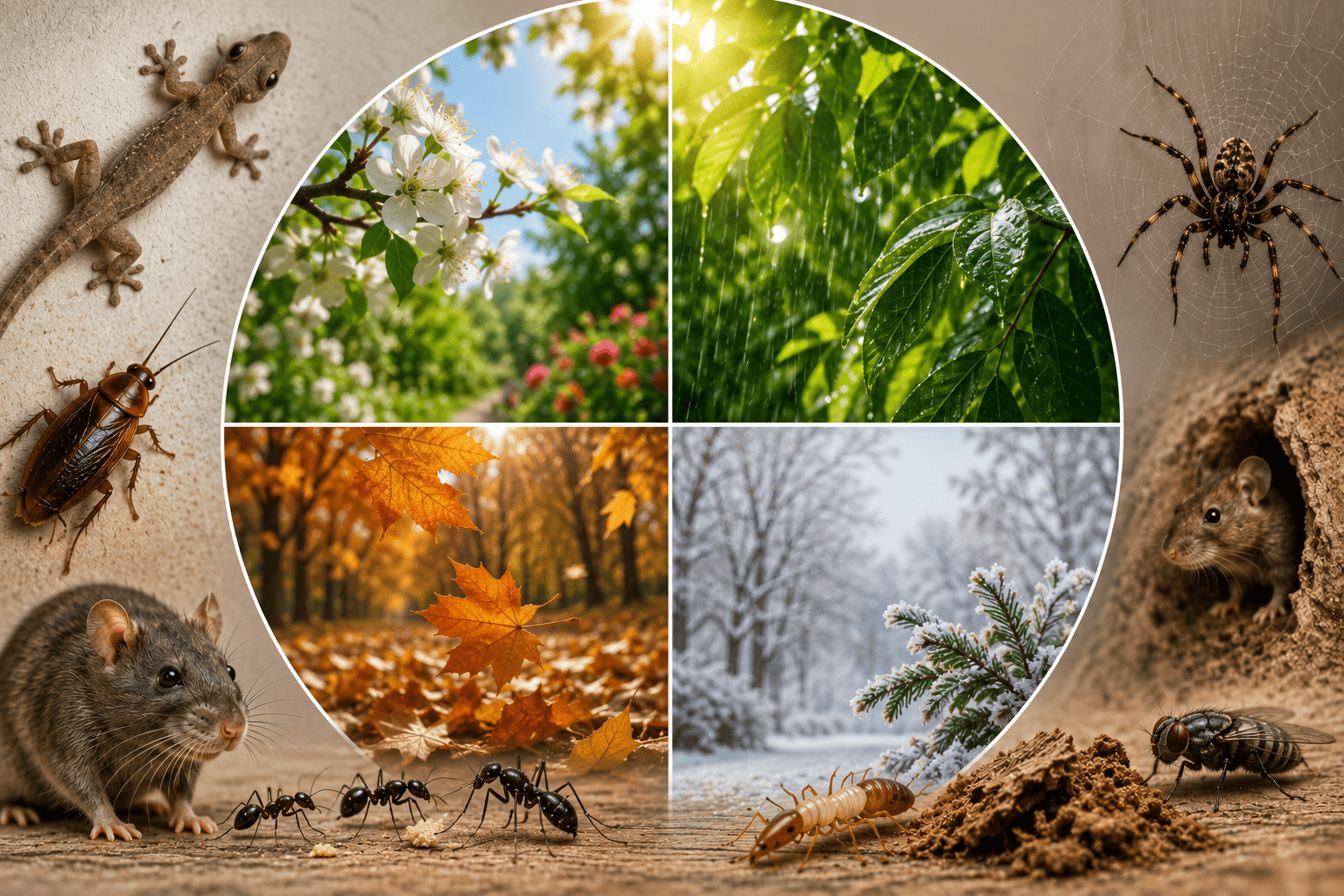
Every season brings changes in temperature, humidity, and food availability—not just for people, but for pests as well. Many homeowners wonder why ants suddenly appear in the kitchen during summer or why rodents seem to invade homes when winter approaches.
The answer lies in seasonal pest migration. Pests naturally move in search of food, water, shelter, and ideal breeding conditions. Understanding these seasonal patterns allows homeowners to prevent infestations before they become expensive problems.
In this blog, we'll explore why pests migrate throughout the year, which pests are most active during each season, and practical ways to protect your property using proven prevention strategies.
Why Do Household Pests Move with the Seasons?
Unlike humans, pests cannot regulate indoor environments. Their survival depends on environmental conditions, making seasonal changes one of the biggest factors influencing their behavior.
The primary reasons pests relocate include:
- Searching for food sources
- Finding water during dry weather
- Escaping extreme temperatures
- Looking for safe nesting areas
- Reproducing during favorable conditions
- Avoiding predators and environmental stress
This movement is entirely natural, but homes often provide everything pests need to survive.
Understanding Seasonal Pest Activity
Spring: The Season of New Infestations
As temperatures begin to rise, insects emerge from winter hiding places.
Common Spring Pests
- Ants
- Termites
- Cockroaches
- Spiders
- Wasps
Why They Become Active
Spring provides ideal conditions for pest activity, including:
- Warmer temperatures
- Increased moisture
- Flowering plants
- New food sources
- Ideal breeding conditions
This is when termite swarms often occur, making spring one of the most important seasons for preventive inspections.
Prevention Tips
- Seal wall cracks.
- Repair leaking pipes.
- Remove standing water.
- Keep kitchens clean.
- Schedule preventive inspections.
Summer: Peak Pest Season
Summer offers ideal breeding conditions for many household pests.
Common Summer Pests
- Mosquitoes
- Flies
- Cockroaches
- Ants
- Bed Bugs
Higher temperatures accelerate insect life cycles, allowing many species to reproduce much faster than during cooler months.
Why Summer Increases Pest Activity
- High humidity
- Faster reproduction
- Outdoor gatherings
- Increased food waste
- Open doors and windows
Prevention Checklist
- Empty outdoor containers.
- Cover garbage bins.
- Store food properly.
- Install window screens.
- Eliminate standing water.
Monsoon and Rainy Season: Moisture Attracts Pests
Rain creates damp environments that attract moisture-loving pests.
Common Rainy Season Pests
- Cockroaches
- Mosquitoes
- Termites
- Snails
- Silverfish
Heavy rainfall may also force pests indoors as underground nests become flooded.
Moisture-Related Risks
- Damp walls
- Leaking roofs
- Water accumulation
- Mold growth
- Wood decay
These conditions provide ideal shelter for many insects.
Protection Tips
- Improve drainage.
- Fix roof leaks.
- Dry damp areas.
- Clean gutters.
- Ventilate bathrooms.
Autumn: Preparing for Winter
As temperatures begin dropping, many pests prepare for colder months.
Common Autumn Pests
- Rodents
- Spiders
- Cockroaches
- Stink Bugs
- Beetles
Homes become attractive because they provide warmth and reliable food sources.
Prevention Measures
- Seal entry points.
- Store pet food securely.
- Trim vegetation near walls.
- Remove clutter.
- Inspect attics and basements.
Winter: Seeking Warm Shelter
Cold weather forces many pests indoors.
Common Winter Pests
- Rats
- Mice
- Cockroaches
- Silverfish
- Spiders
Although insect activity outdoors slows down, indoor infestations often increase.
Winter Prevention
- Close foundation gaps.
- Keep firewood away from the house.
- Store food in airtight containers.
- Clean storage rooms.
- Monitor hidden spaces.
Why Some Pests Never Truly Leave
Many homeowners believe pests disappear during winter. In reality, several species simply relocate indoors.
Cockroaches
They thrive in warm kitchens, bathrooms, and utility rooms throughout the year.
Rodents
Rats and mice actively seek heated buildings where food remains available.
Bed Bugs
Since they feed exclusively on humans, seasonal weather has little impact on their survival inside homes.
Termites
Subterranean termites continue feeding underground even during colder months.
Warning Signs That Seasonal Pests Have Entered Your Home
Early detection helps prevent extensive infestations.
Watch for:
- Droppings
- Strange odors
- Gnaw marks
- Mud tubes
- Shed insect skins
- Unusual scratching sounds
- Dead insects near windows
- Small holes in wooden furniture
Pest populations may increase quickly if these warning indicators are ignored.
Why Prevention Is Better Than Treatment
Many infestations begin unnoticed.
Preventive pest management helps:
- Reduce property damage.
- Protect food from contamination.
- Lower long-term treatment costs.
- Prevent structural damage.
- Improve indoor hygiene.
- Reduce health risks associated with pests.
Routine inspections are often less expensive than repairing damage caused by established infestations.
Seasonal Pest Prevention Checklist
Use this simple year-round checklist:
Spring
- Inspect for termites.
- Seal exterior cracks.
- Clean gutters.
Summer
- Remove standing water.
- Cover food outdoors.
- Clean garbage areas.
Rainy Season
- Fix moisture problems.
- Dry damp rooms.
- Inspect wooden structures.
Autumn
- Seal entry points.
- Remove yard debris.
- Trim vegetation.
Winter
- Store food securely.
- Monitor basements.
- Inspect attics regularly.
FAQs
Why do pests enter homes during different seasons?
Pests move indoors to find food, water, warmth, and safe shelter when outdoor conditions become unfavorable.
Which season has the highest pest activity?
Summer generally experiences the highest pest activity because warm temperatures and humidity accelerate breeding and increase food availability.
Do pests disappear during winter?
No. Many pests survive by moving indoors or hiding in protected locations where temperatures remain stable.
How can I stop seasonal pest infestations?
Regular inspections, sealing entry points, reducing moisture, maintaining cleanliness, and addressing structural vulnerabilities significantly reduce the risk of infestations.
Why are termites more active during spring?
Spring provides ideal temperatures and moisture levels for termite swarming, colony expansion, and reproduction.
Expert Recommendations for Year-Round Pest Protection
Effective pest management isn't about reacting after pests appear—it's about preventing them from becoming established.
Professionals recommend:
- Scheduling routine property inspections.
- Addressing moisture issues promptly.
- Maintaining proper sanitation.
- Repairing structural gaps.
- Monitoring seasonal pest trends in your area.
- Acting quickly when early signs of infestation are detected.
A proactive approach helps minimize health risks, property damage, and unnecessary expenses.
Conclusion
Seasonal pest movement is a natural response to changing environmental conditions. While you can't stop pests from searching for food, water, and shelter, you can make your home far less attractive to them.
By understanding why household pests move throughout the year, recognizing seasonal warning signs, and following preventive maintenance practices, homeowners can significantly reduce the likelihood of infestations.
Staying ahead of seasonal pest activity with regular inspections, proper sanitation, and timely maintenance is the most effective strategy for protecting your home, family, and investment throughout every season.