 Instagram
 Facebook
 Whatsapp
 Youtube
 Contact
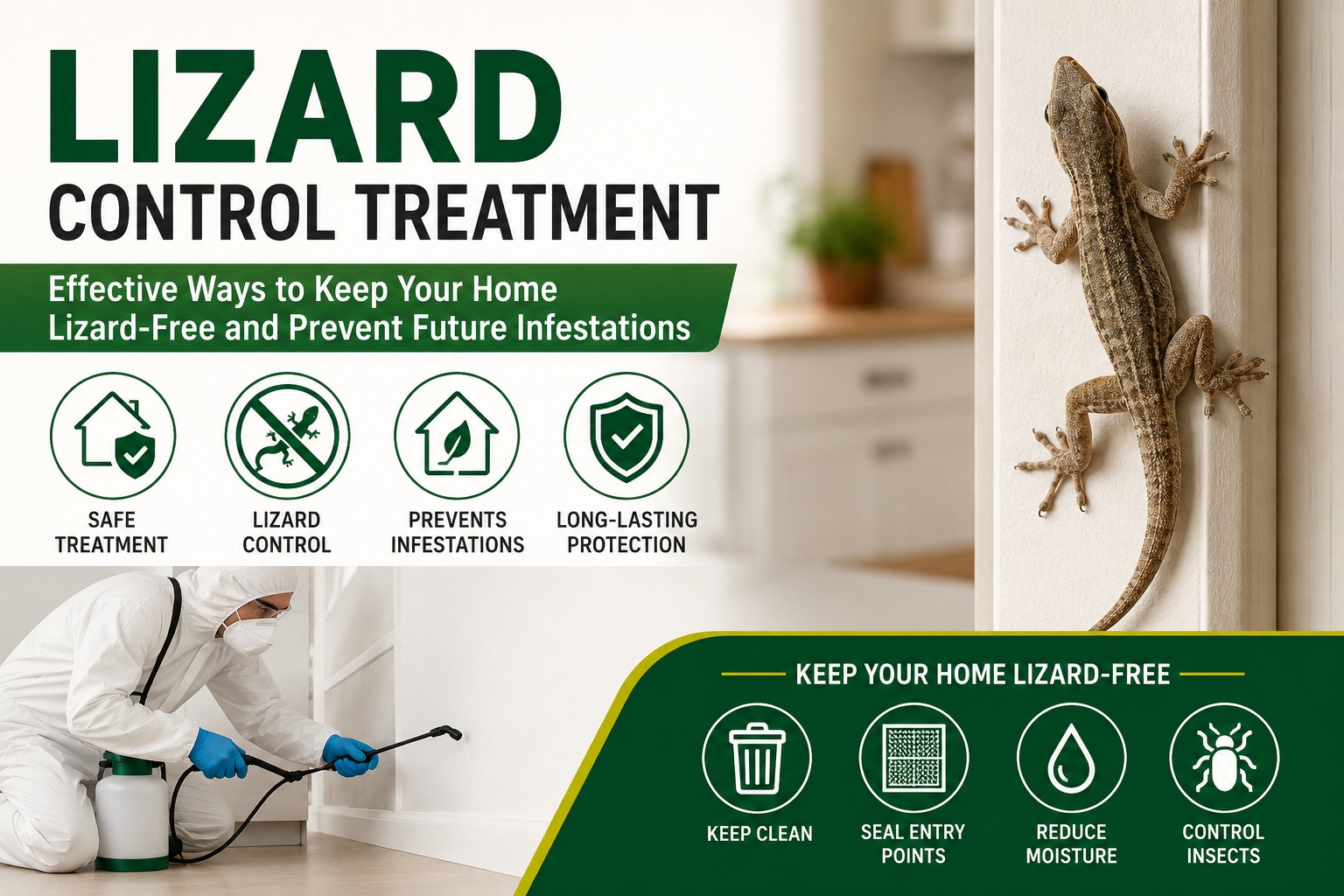
Lizards are a common sight in many homes, especially in warm climates. They often appear on walls, ceilings, kitchens, balconies, and storage spaces. While lizards help by feeding on insects, their presence indoors can make many homeowners uncomfortable.
If you frequently notice lizards in your house, office, restaurant, or commercial property, taking the right preventive and control measures is essential. This guide explains why lizards enter buildings, the signs of an infestation, effective treatment methods, and practical prevention strategies for long-term protection.
Why Do Lizards Enter Homes?
Many homeowners wonder why lizards suddenly start appearing indoors. The answer is simple: they enter properties in search of food, water, shelter, and safe breeding locations.
Common factors that attract lizards include:
- High insect activity
- Open doors and windows
- Cracks and gaps in walls
- Damp or humid environments
- Cluttered storage areas
- Outdoor lighting that attracts insects
Understanding these attractants is the first step toward creating a lizard-free environment.
Signs That You May Need Lizard Control Treatment
Recognizing the early warning signs can help prevent a minor issue from becoming a larger infestation.
Frequent Lizard Sightings
Occasionally spotting a lizard may not be unusual. However, seeing multiple lizards regularly can indicate favorable conditions for them inside your property.
Presence of Lizard Droppings
Small dark droppings found near walls, cupboards, kitchen areas, or storage spaces are a common sign of lizard activity.
Discovery of Eggs
Lizards often lay eggs in hidden and undisturbed areas such as cracks, crevices, and behind furniture. Finding eggs is a strong indication that they have established themselves indoors.
Increased Insect Activity
Since insects are a primary food source for lizards, an increase in flies, mosquitoes, ants, or other pests often leads to greater lizard activity.
Effective Lizard Control Treatment Methods
A successful lizard control strategy focuses on removing the factors that attract them while making your property less suitable for shelter and breeding.
Remove Food Sources
Lizards depend heavily on insects for survival. Reducing insect populations can significantly decrease lizard activity.
Helpful practices include:
- Keeping kitchen surfaces clean
- Disposing of garbage regularly
- Avoiding food crumbs and spills
- Managing flies, mosquitoes, and other insects
Seal Entry Points
Lizards can enter through surprisingly small openings.
Inspect and seal:
- Window gaps
- Wall cracks
- Door openings
- Pipe and utility penetrations
- Ventilation gaps
Installing mesh screens can also help prevent entry.
Reduce Moisture Levels
Humid environments provide favorable conditions for both insects and lizards.
To reduce moisture:
- Repair leaking pipes and faucets
- Improve airflow and ventilation
- Keep bathrooms dry
- Prevent standing water accumulation
Clean and Declutter Regularly
Storage areas filled with unused items create ideal hiding spots.
Routine cleaning helps:
- Remove potential nesting sites
- Reduce insect populations
- Identify hidden problem areas
- Improve overall hygiene
Professional Lizard Control Treatment
For recurring or widespread lizard problems, professional treatment can provide a more comprehensive solution.
Benefits often include:
- Detailed property inspection
- Customized treatment plans
- Access to specialized products and techniques
- Treatment of hard-to-reach locations
- Long-term prevention strategies
How Long Do Lizard Control Results Last?
One of the most common questions is whether lizard control offers permanent results.
The effectiveness and longevity of treatment depend on several factors:
- Severity of the infestation
- Property maintenance practices
- Insect control measures
- Sealing of entry points
- Environmental conditions
Properties that combine treatment with preventive maintenance generally experience better long-term outcomes.
How to Prevent Future Lizard Infestations
Preventive measures play a crucial role in maintaining a lizard-free property.
Install Protective Screens
Use mesh screens on windows, vents, and other openings to reduce entry opportunities.
Limit Outdoor Lighting
Bright exterior lights attract insects, which can indirectly attract lizards.
Maintain Regular Pest Control
Managing insect populations reduces the food sources that encourage lizards to stay.
Store Food Securely
Keep food covered and stored in sealed containers to discourage insects.
Schedule Routine Inspections
Regular inspections help identify vulnerabilities before they become major problems.
Are Lizard Control Treatments Safe?
Modern lizard control solutions are generally designed to be safe when applied correctly and responsibly.
Professional service providers typically focus on:
- Safe application procedures
- Minimal disruption to daily activities
- Environmentally conscious practices
- Property-specific treatment plans
Following post-treatment recommendations can further improve effectiveness and safety.
Residential and Commercial Lizard Control Solutions
Lizard control services can benefit a wide range of properties, including:
- Homes and apartments
- Office buildings
- Restaurants and cafes
- Retail stores
- Warehouses
- Educational institutions
- Healthcare facilities
- Commercial complexes
Each property type may require a customized treatment approach based on its unique environment and level of infestation.
Why DIY Lizard Control Methods Often Deliver Limited Results
While home remedies may provide temporary relief, they often fail to address the underlying causes of lizard activity.
Common reasons include:
- Hidden eggs remaining untreated
- Overlooked nesting locations
- Incomplete insect management
- Unsealed access points
- Lack of long-term prevention measures
A comprehensive approach is usually more effective than relying solely on temporary solutions.
Conclusion
Keeping your property free from lizards requires more than a quick fix. Successful lizard control involves reducing insect populations, sealing entry points, minimizing moisture, maintaining cleanliness, and implementing preventive measures.
Whether you are dealing with occasional sightings or ongoing lizard activity, taking proactive steps early can help create a cleaner, healthier, and more comfortable living or working environment.
Long-term prevention combined with proper treatment remains the most effective way to maintain lasting results.
FAQs
How can I keep lizards away from my home for the long term?
Long-term control involves reducing insect activity, sealing entry points, eliminating hiding places, and maintaining regular property inspections.
What attracts lizards indoors?
Lizards are typically attracted by food sources such as insects, as well as moisture, warmth, and sheltered areas.
Is professional lizard control worth considering?
Professional treatment can be beneficial for recurring infestations because it addresses both visible activity and the underlying causes.
How often should lizard control treatment be performed?
The frequency depends on factors such as infestation levels, environmental conditions, and ongoing maintenance practices.
Can lizards return after treatment?
Yes. If food sources, moisture, or access points remain available, lizards may return. Consistent prevention measures help reduce this risk.