 Instagram
 Facebook
 Whatsapp
 Youtube
 Contact
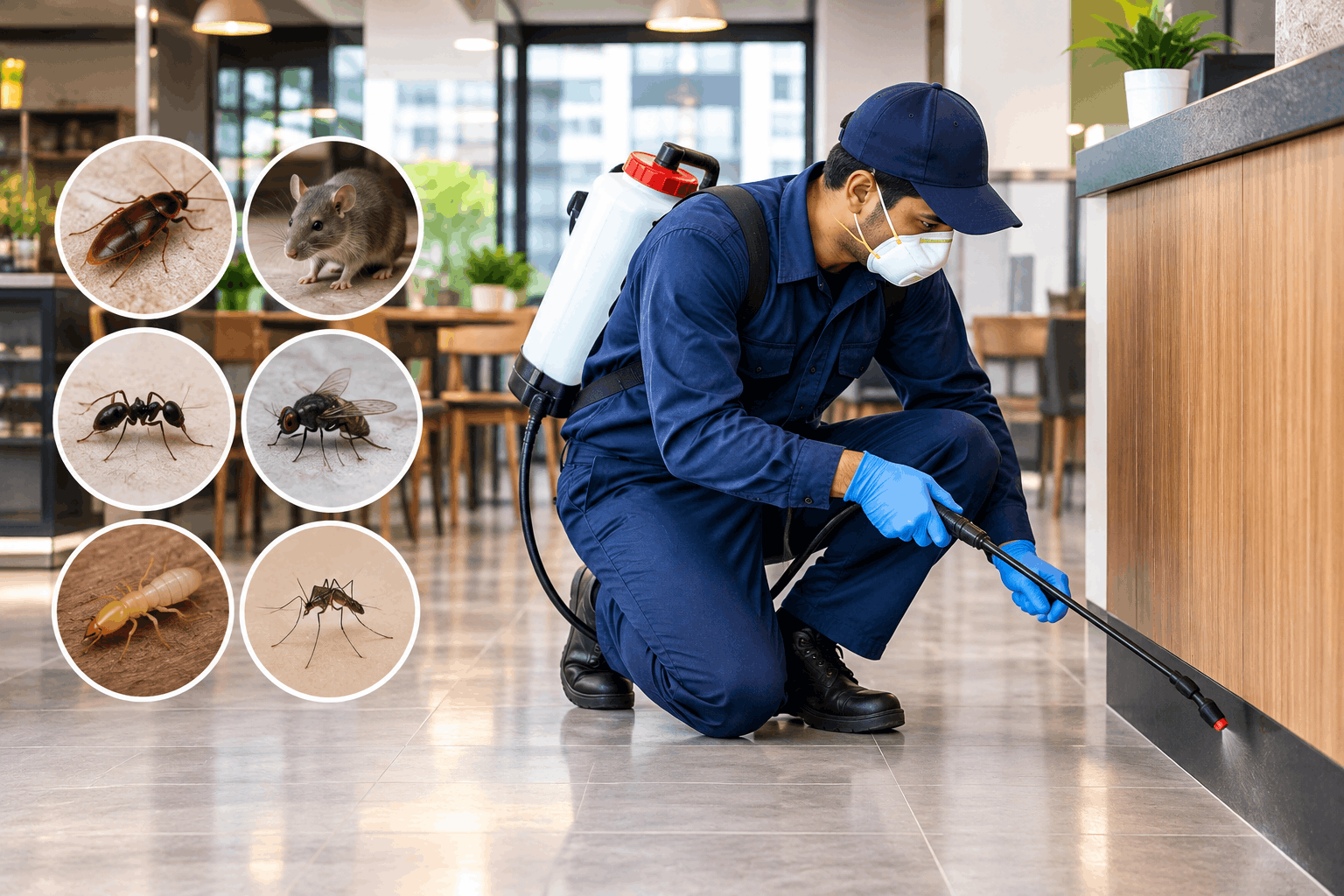
A serious pest problem is not always obvious. You may rarely see the pests themselves because many species are active at night or hide inside walls, drains, storage areas, and other inaccessible spaces.
Look for these warning signs:
- Frequent sightings of cockroaches, rodents, ants, flies, or other pests
- Pest droppings or unusual odors
- Gnaw marks on packaging, wires, furniture, or stored materials
- Damaged food packaging or products
- Pest nests, eggs, shed skins, or insect remains
- Grease or smear marks along walls and frequently used pathways
- Repeated customer or employee complaints
- Pest activity returning after DIY treatment
- Damage around doors, windows, drains, or other entry points
If you are noticing several of these signs, the problem may be more than an occasional pest sighting.
Why Are Pest Infestations a Bigger Concern for Businesses?
For a home, finding a pest can be frustrating. For a business, the consequences can extend much further.
A pest infestation can affect your day-to-day operations, workplace hygiene, inventory, and reputation. Customers who notice pests in a restaurant, hotel, shop, or other commercial property may immediately question the cleanliness of the entire business.
Depending on the type of business, pests may also damage stock, packaging, electrical wiring, furniture, documents, or building materials.
That is why commercial pest management should focus not only on eliminating visible pests but also on identifying and addressing the conditions that allow them to thrive.
Which Pests Commonly Affect Businesses in Nagpur?
Different commercial properties can experience different pest problems. Common concerns include:
Cockroaches
Cockroaches are attracted to food, moisture, warmth, and hiding spaces. Restaurants, hotels, food outlets, kitchens, and storage areas can be particularly vulnerable when food particles, waste, or moisture are readily available.
Rodents
Rats and mice can enter commercial properties through surprisingly small openings. They may damage packaging, electrical wiring, stored goods, and other materials while also leaving droppings and nesting material behind.
Ants
Ant infestations often begin around food sources, moisture, cracks, and entry points. A few visible ants may indicate a larger colony nearby.
Flies
Flies can become a significant concern for businesses dealing with food, waste, or organic material. Poor waste management and sanitation can contribute to recurring fly activity.
Termites
Termites can remain hidden for long periods while damaging wooden structures and other materials. Businesses with significant wooden fixtures, furniture, or structural elements should pay attention to early signs of termite activity.
Mosquitoes
Standing water around a commercial property can create breeding opportunities for mosquitoes. Drains, containers, landscaping areas, and poorly maintained outdoor spaces can contribute to the problem.
Can Seeing One Pest Mean You Have an Infestation?
Not necessarily.
One pest sighting does not automatically mean that a property has a major infestation. However, repeated sightings should not be ignored.
For example, seeing a cockroach repeatedly in different areas of your business could indicate that pests are finding food, water, or shelter inside the property. Similarly, finding rodent droppings without seeing a rat or mouse can still be a reason to investigate further.
The important question is not simply, “How many pests have I seen?”
It is:
“Why are pests entering my business, and where are they hiding?”
A professional inspection can help identify potential entry points, nesting areas, food sources, moisture problems, and other conditions contributing to pest activity.
Why DIY Pest Control May Not Solve a Commercial Infestation
Store-bought sprays and traps may provide temporary relief for minor pest activity, but they do not always address the source of a commercial infestation.
For example, spraying a cockroach that you see does not necessarily eliminate the pests hiding behind appliances, inside cabinets, around drains, or in other concealed areas.
Similarly, placing a few rodent traps may not solve the problem if rodents can continue entering through gaps in walls, doors, ceilings, or utility openings.
Commercial properties often require a more structured approach that combines inspection, treatment, monitoring, sanitation, and prevention.
When Should a Business Hire Professional Pest Control?
You should consider contacting a professional pest control provider when:
- Pest activity is becoming more frequent
- You see pests in multiple areas of the property
- Customers or employees have reported pest sightings
- Food, products, packaging, or equipment are being affected
- You discover droppings, nests, eggs, or other evidence of pests
- DIY treatments have failed
- Pests continue returning after treatment
- You suspect termites or rodents
- Your business handles food or other products that require strict hygiene
- You want to prevent an infestation before it becomes severe
Acting early can make pest management more manageable and help reduce the disruption caused by a larger infestation.
How Does Commercial Pest Control Work?
Professional commercial pest control generally begins with understanding the property and the pest problem.
A technician may inspect areas such as:
- Kitchens and food-preparation areas
- Storage rooms
- Waste disposal areas
- Drains and moisture-prone locations
- Entry points around doors and windows
- Wall gaps and utility openings
- Basements and service areas
- Outdoor areas surrounding the property
Based on the findings, the pest control professional can recommend an appropriate treatment and prevention strategy.
Depending on the pest and property, this may include targeted applications, traps, monitoring devices, baits, exclusion measures, sanitation recommendations, or other pest management methods.
How Can Businesses Prevent Pest Infestations?
Professional treatment is only one part of effective pest management. Businesses can also reduce pest activity by improving everyday prevention practices.
Keep Food Areas Clean
Clean spills and food residues promptly, especially in kitchens, cafeterias, restaurants, and food storage areas.
Manage Waste Properly
Keep waste containers closed and remove garbage regularly. Overflowing or poorly managed waste can attract insects and rodents.
Reduce Moisture
Repair leaking pipes, taps, drains, and other sources of unnecessary moisture. Keep areas around sinks and drainage points clean and dry where possible.
Seal Potential Entry Points
Inspect doors, windows, walls, vents, pipes, and utility openings for gaps through which pests can enter.
Keep Storage Areas Organized
Avoid unnecessary clutter and maintain sufficient space around walls and storage areas so that pest activity can be detected more easily.
Schedule Regular Inspections
Businesses with a higher risk of pest activity may benefit from routine professional inspections and preventive pest management rather than waiting until an infestation becomes obvious.
How Often Should a Business in Nagpur Get Pest Control?
There is no single schedule that works for every business.
The appropriate frequency depends on factors such as the type of business, property size, pest pressure, location, food-handling activities, sanitation conditions, previous infestation history, and environmental conditions.
A restaurant, warehouse, hotel, or food-processing facility may have different pest management requirements from a small office or retail store.
A professional pest control provider can assess the property and recommend a service schedule based on its specific risk factors.
What Should You Look for in a Commercial Pest Control Service in Nagpur?
Choosing a pest control provider based only on price can be risky. Businesses should look for a service provider that takes a systematic approach to pest management.
Consider a company that:
- Understands commercial pest control requirements
- Inspects the property before recommending treatment
- Clearly explains the treatment process
- Identifies potential pest entry points and contributing factors
- Provides appropriate preparation and safety instructions
- Uses targeted treatment methods where suitable
- Offers preventive recommendations
- Maintains clear communication with the business owner or facility manager
- Can provide a suitable ongoing pest management plan when required
The right provider should focus on both pest elimination and long-term prevention.
Why Regular Commercial Pest Control Can Be Better Than Emergency Treatment
Waiting until an infestation becomes severe can create unnecessary stress for a business.
Emergency pest control may become necessary when pest activity suddenly becomes visible, but preventive pest management can help businesses identify risks before they develop into major problems.
Regular inspections and monitoring can help detect early signs of pest activity and allow businesses to address issues before they affect customers, employees, inventory, or daily operations.
For businesses where hygiene and customer experience are particularly important, prevention can be far more practical than waiting for a serious infestation.
Final Thoughts: Don't Wait Until Pests Become a Business Problem
A single pest sighting does not necessarily mean your Nagpur business has a serious infestation. However, repeated sightings, droppings, property damage, unpleasant odors, customer complaints, or recurring pest activity are signs that you should investigate further.
Professional commercial pest control can help businesses identify the source of pest activity, address existing infestations, and develop practical measures to reduce the risk of future problems.
Whether you operate a restaurant, hotel, office, warehouse, retail store, or another commercial property, early action can help protect your workplace, products, reputation, and customers.
If pest activity keeps returning despite your efforts, it may be time to move beyond temporary fixes and consider a professional commercial pest control service in Nagpur.
Frequently Asked Questions
How do I know if my business has a pest infestation?
Frequent pest sightings, droppings, damaged packaging, unusual odors, nests, property damage, and recurring customer or employee complaints can indicate a pest infestation. A professional inspection can help determine the extent of the problem.
What are the most common pests found in commercial properties?
Common commercial pests include cockroaches, rodents, ants, flies, termites, and mosquitoes. The risk varies depending on the type of business, property conditions, food availability, moisture, and surrounding environment.
Is one cockroach a sign of an infestation?
Not always. However, repeated cockroach sightings can indicate that more pests may be hiding nearby. If cockroach activity continues, a professional inspection can help identify the source.
How can businesses prevent pest infestations?
Businesses can reduce pest risks by maintaining good sanitation, managing waste properly, reducing moisture, sealing entry points, keeping storage areas organized, and arranging professional inspections when appropriate.
How often should commercial properties receive pest control?
The ideal frequency depends on the property, business type, pest risk, previous infestation history, and environmental conditions. A professional pest control provider can recommend a suitable schedule after assessing the property.
Why choose professional commercial pest control instead of DIY methods?
Professional pest control can provide a more systematic approach by identifying pest entry points, hiding areas, contributing conditions, and suitable treatment options. This can be especially useful when pests keep returning after DIY treatment.