 Instagram
 Facebook
 Whatsapp
 Youtube
 Contact
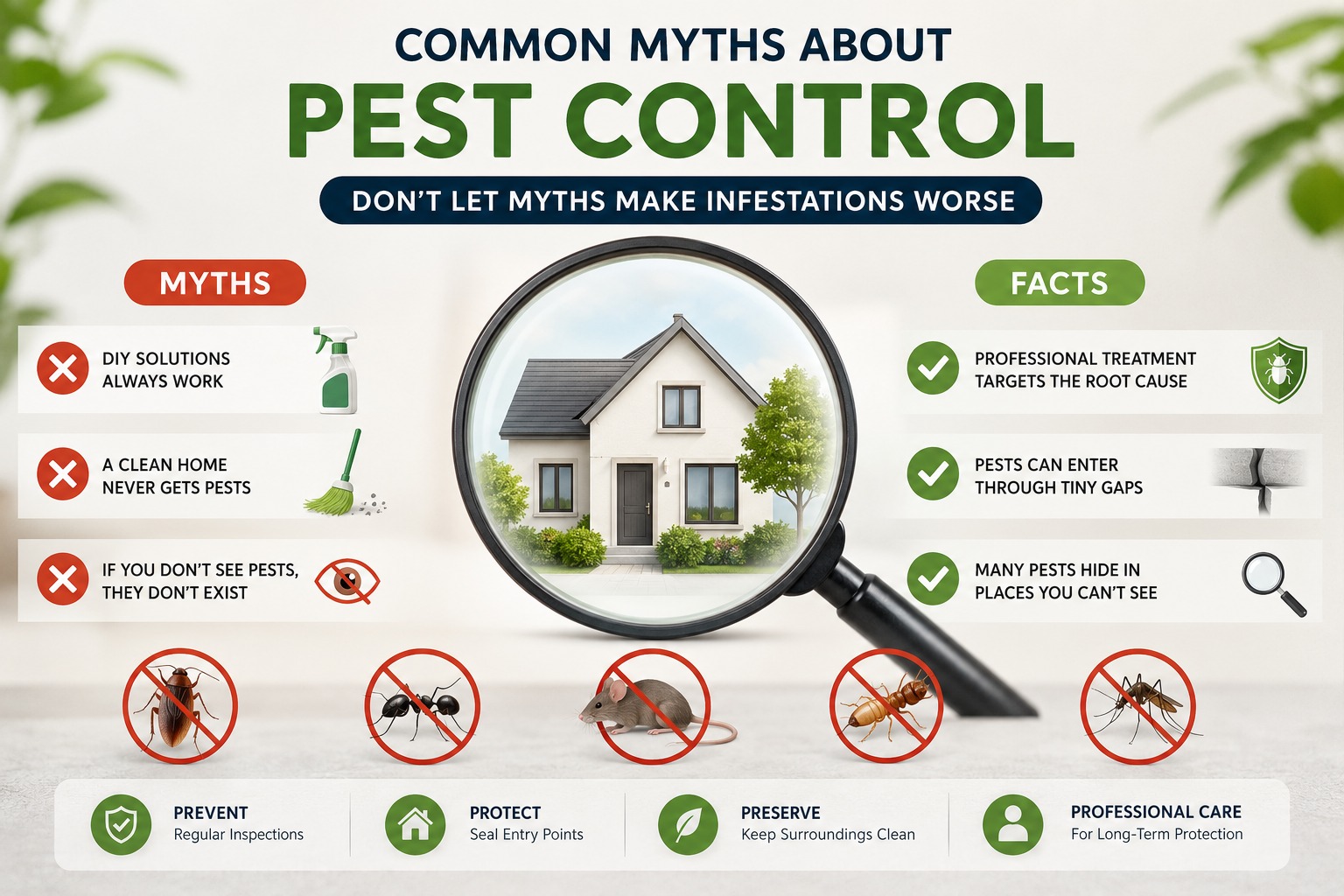
Pest infestations are one of the most common challenges faced by homeowners and businesses. Whether it's termites silently damaging wooden structures, cockroaches contaminating food, rodents spreading diseases, or mosquitoes breeding around your property, pests can cause serious health risks and expensive property damage. Unfortunately, many people rely on outdated advice, internet myths, or DIY hacks that often make pest problems even worse.
Believing these misconceptions can delay effective treatment, allowing pests to multiply rapidly and become harder to eliminate. Modern pest management is based on scientific research, Integrated Pest Management (IPM), environmental responsibility, and targeted treatments rather than guesswork.
In this guide, we'll debunk the most common pest control myths, explain why they are misleading, and provide practical, expert-backed solutions to help protect your home or business.
Why Pest Control Myths Can Be Dangerous
Many pest control myths have been passed down through generations or spread across social media without scientific evidence. While some home remedies may seem harmless, they often fail to address the root cause of an infestation. As pests continue to breed unnoticed, the infestation becomes larger, requiring more extensive and costly treatment later.
One of the biggest misconceptions is that seeing only one pest means there isn't a serious problem. In reality, many pests live in colonies or remain hidden inside walls, furniture, roofs, drains, or underground. By the time visible signs appear, hundreds or even thousands of pests may already be present. Termites, for example, can silently damage wooden structures for years before homeowners notice visible destruction.
Another major issue is delaying professional inspections because the infestation appears minor. Early detection is one of the most effective ways to reduce treatment costs and prevent structural damage. Regular inspections by trained professionals help identify hidden infestations before they become severe.
The Most Common Pest Control Myths Debunked
Myth 1: DIY Solutions Always Work
Many homeowners believe vinegar, baking soda, essential oils, or homemade sprays permanently eliminate pests. While some natural products may temporarily repel certain insects, they rarely destroy nests, colonies, eggs, or breeding sites. As a result, pests quickly return once the temporary effect wears off.
Professional pest control uses targeted products, proper application techniques, and species-specific treatments that address the entire infestation instead of simply reducing visible activity. Modern treatments are also designed to minimize environmental impact while maximizing effectiveness.
DIY methods may be suitable for minor prevention, but recurring infestations usually indicate a deeper problem that requires expert diagnosis.
Myth 2: A Clean Home Never Gets Pests
Cleanliness certainly reduces the chances of attracting pests, but it does not guarantee complete protection. Many pests enter homes seeking moisture, warmth, shelter, or breeding areas rather than food.
- Termites feed on wood regardless of cleanliness.
- Bed bugs travel through luggage, furniture, and clothing.
- Rodents enter buildings through tiny gaps to escape weather conditions.
- Mosquitoes breed in standing water outside even the cleanest homes.
Good sanitation should always be combined with proper sealing of entry points, moisture control, waste management, and regular inspections.
Myth 3: If You Don't See Pests, They Don't Exist
This is one of the most expensive mistakes property owners make. Most pests are nocturnal or live in hidden spaces where they remain unnoticed for long periods.
- Cockroaches hide behind appliances and inside wall voids.
- Rodents nest in ceilings and storage areas.
- Termites remain inside wooden structures and underground colonies.
- Bed bugs hide inside mattresses, furniture joints, and cracks during the day.
Ignoring early warning signs allows infestations to expand rapidly, making treatment more complicated and expensive.
Smart Pest Prevention Strategies That Actually Work
Effective pest control begins with prevention rather than reaction. Regular property inspections help identify potential problems before they develop into major infestations. Professional technicians can detect early signs that homeowners often overlook, including droppings, damaged wood, moisture issues, nesting materials, and entry points.
Integrated Pest Management (IPM) combines sanitation, habitat modification, structural repairs, monitoring, and targeted treatments to achieve long-term pest control while reducing unnecessary pesticide use. This science-based approach is widely recommended because it addresses the underlying causes of infestations instead of only treating visible pests.
Homeowners should also eliminate standing water, repair leaking pipes, store food in sealed containers, dispose of garbage properly, trim vegetation touching buildings, and seal cracks around doors, windows, and utility lines. These simple preventive measures significantly reduce pest activity throughout the year.
Conclusion
Pest control myths may seem harmless, but they often lead to larger infestations, higher repair costs, and increased health risks. Believing that DIY remedies permanently solve pest problems, assuming clean homes never attract pests, or waiting until pests become visible can all allow infestations to spread unnoticed.
The most effective approach combines preventive maintenance, regular inspections, proper sanitation, and professional pest management when necessary. Scientific, evidence-based pest control not only eliminates existing infestations but also helps prevent future outbreaks while protecting your family's health and your property's value.
When you notice unusual pest activity, it's always better to act early rather than wait until the problem becomes severe. Early intervention saves time, money, and unnecessary stress.
FAQs
1. Are DIY pest control methods enough?
DIY methods may help with temporary relief, but they rarely eliminate the source of an infestation. Professional treatment is often needed for complete control.
2. Can a clean home still get pests?
Yes. Many pests are attracted to moisture, shelter, and warmth rather than dirt or food alone.
3. How often should I schedule pest inspections?
For most homes, an annual inspection is recommended. Commercial properties or areas with high pest activity may benefit from more frequent inspections.
4. Is professional pest control safe for families and pets?
Reputable pest control companies use approved products and follow safety guidelines. Always follow the technician's instructions before and after treatment.
5. What is Integrated Pest Management (IPM)?
IPM is a long-term pest management strategy that combines prevention, monitoring, sanitation, habitat modification, and targeted treatments to reduce pest populations effectively and responsibly.