 Instagram
 Facebook
 Whatsapp
 Youtube
 Contact
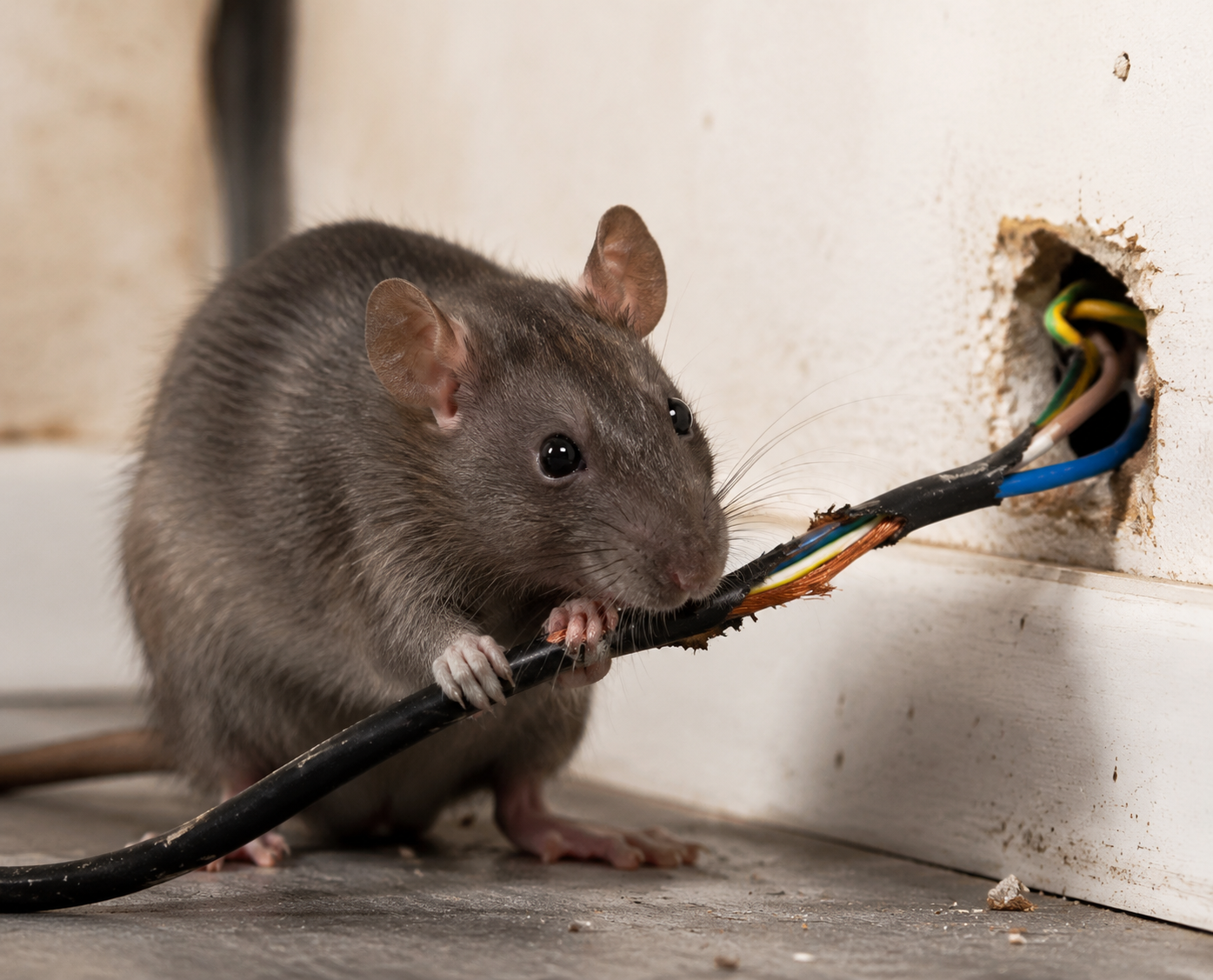
Rats do not necessarily chew wires because they are attracted to electricity. Their teeth continue growing throughout their lives, creating a natural need to gnaw.
Electrical cables may be found in places where rats commonly travel, including wall cavities, ceilings, garages, storage areas, kitchens, and behind appliances. When rodents encounter exposed or accessible cables, they may chew through the outer insulation.
Once the protective coating is damaged, the internal conductors can become exposed.
How Can Rodents Damage Electrical Wiring?
Rodents can cause several types of electrical damage, including:
1. Damaged Wire Insulation
The outer insulation protects electrical conductors from contact and environmental exposure. When rats chew through it, the wires can become vulnerable to short circuits and further deterioration.
2. Exposed Conductors
Severely damaged insulation may expose the conductive metal inside the cable. This can increase the risk of electrical faults and create a potentially dangerous situation.
3. Intermittent Electrical Problems
Rodent damage is not always immediately obvious. Partially damaged cables may cause flickering lights, malfunctioning appliances, or circuits that trip unexpectedly.
4. Fire Risk
A damaged electrical cable can potentially produce heat, sparks, or short circuits. If combustible materials are nearby, the situation can become hazardous.
For this reason, suspected rodent-related electrical damage should never be treated as a minor household nuisance.
Signs That Rats May Be Damaging Your Wiring
Rodents are often active when people are asleep, which means damage can occur unnoticed. Look for signs such as:
- Gnaw marks on wires, cables, or plastic coverings
- Scratching or chewing sounds inside walls or ceilings
- Rat droppings near electrical equipment
- Damaged insulation around appliances
- Unexplained circuit breaker trips
- Flickering lights or intermittent appliance problems
- A noticeable rodent smell in enclosed areas
- Nesting material near wiring or electrical equipment
Finding one sign does not automatically prove that rats caused an electrical problem. However, multiple signs together can indicate that a professional inspection is needed.
Which Areas Are Most Vulnerable?
Rodents tend to seek warm, sheltered areas that provide access to food and water. This can put wiring in several parts of a property at risk.
Common areas include kitchens, garages, false ceilings, attics, storage rooms, electrical cabinets, wall cavities, and spaces behind refrigerators or other appliances.
Commercial properties can face similar problems. Restaurants, warehouses, offices, shops, and food-storage facilities may provide rodents with plenty of shelter and food sources.
What Should You Do If You Find Chewed Wires?
Safety should come first.
If you discover visibly damaged electrical wiring, do not touch exposed wires or attempt a DIY repair. Turn off the relevant electrical supply if it is safe to do so and contact a qualified electrician to inspect and repair the wiring.
At the same time, investigate the underlying rodent problem. Repairing a damaged cable without addressing the infestation may only solve part of the problem. Rodents can return and damage newly repaired wiring.
Professional pest control can help identify rodent activity, potential entry points, nesting areas, and conditions that may be supporting the infestation.
How Can You Prevent Rodent-Related Wiring Damage?
Prevention is easier when rodent access is reduced.
Seal gaps around doors, pipes, vents, and wall openings. Keep food stored in secure containers, clean food spills promptly, reduce clutter, and avoid leaving accessible water or waste around the property.
Regular inspections are particularly useful for businesses and larger properties where rodents may remain hidden for longer periods.
```htmlIf signs of infestation continue, professional rodent control treatment in Nagpur can help address the problem using an appropriate, structured approach based on the property and level of rodent activity.
Frequently Asked Questions
Can rats really chew through electrical wires?
Yes. Rats and other rodents can chew through many types of cable insulation. Their natural gnawing behavior can result in damaged coverings and, in severe cases, exposed conductors.
Can chewed wires cause a house fire?
Damaged wiring can increase electrical risks, including short circuits and overheating. If you find chewed or exposed wires, have them assessed by a qualified electrician promptly.
How do I know if rats are inside my walls?
Scratching sounds, droppings, gnaw marks, unusual smells, and nesting materials can indicate rodent activity. A professional inspection can help identify hidden activity.
Will removing rats prevent future wire damage?
Removing active rodents is important, but long-term prevention also requires addressing entry points, food sources, shelter, and other conditions that attract rodents.
Protect Your Property Before Small Damage Becomes a Bigger Problem
A rodent infestation can remain hidden while causing damage in places you cannot easily see. Electrical wiring is one of the most important areas to watch because damage may create safety concerns as well as repair costs.
If you notice signs of rodents around your home or business, early action can help limit the damage. For persistent infestations, consider a professional rodent control treatment in Nagpur rather than relying only on temporary DIY solutions.