 Instagram
 Facebook
 Whatsapp
 Youtube
 Contact

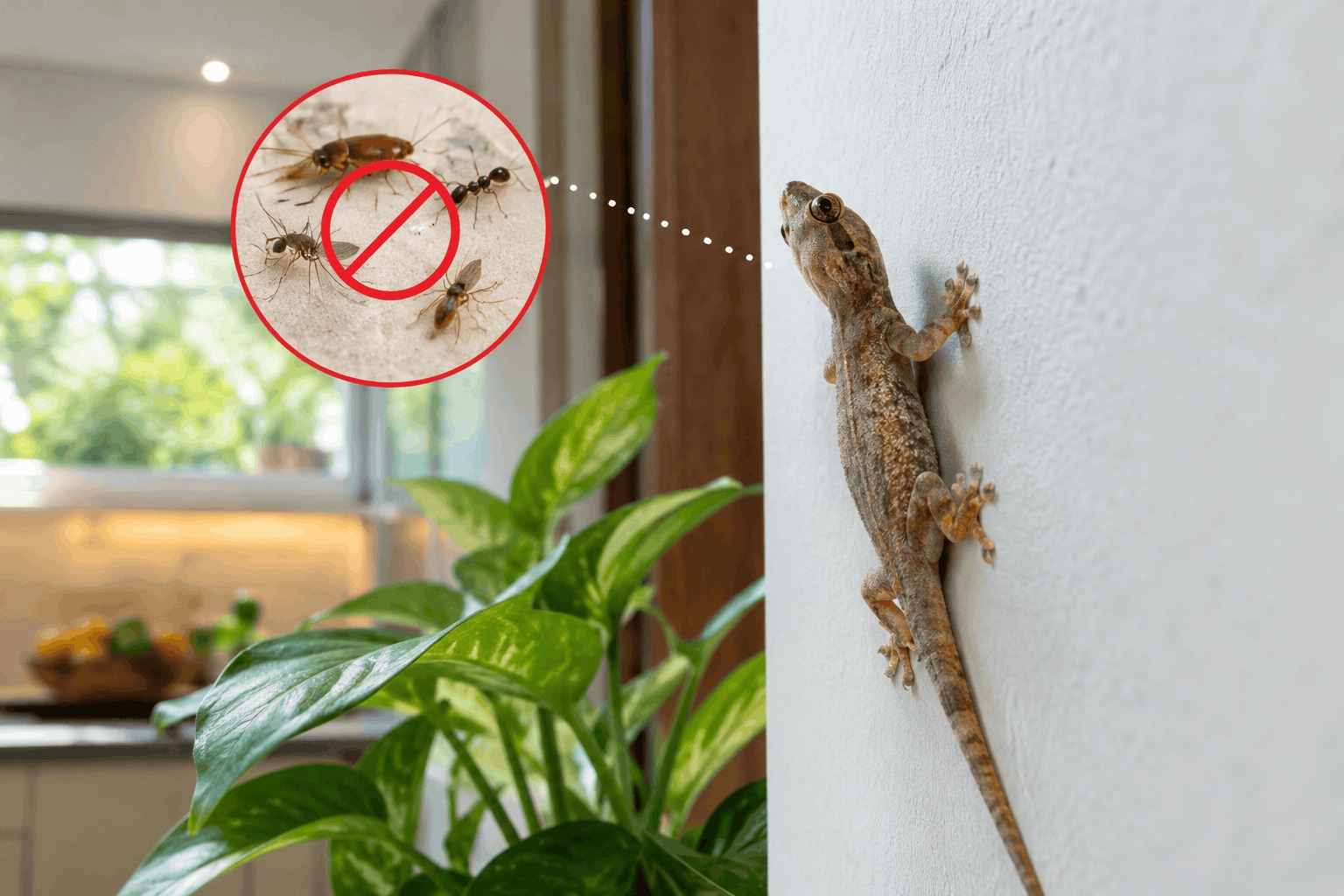
Most common house geckos are insectivores, meaning they primarily eat insects and other small invertebrates. They often hunt around walls, ceilings, windows, gardens, and outdoor lights where insects gather.
For example, if mosquitoes and moths frequently gather around a light near your entrance, a lizard may visit that area to find food. Similarly, a room with recurring flies or other small insects may provide feeding opportunities.
This relationship is a natural part of the food chain. Lizards help consume insects, but their presence inside a home may still be unwanted.
The connection can be explained simply:
- More available insects can create more feeding opportunities for lizards.
- Accessible food may encourage lizards to visit an area regularly.
- Reducing insect activity may make that area less attractive for hunting.
- Sealing entry points and reducing hiding places can further discourage lizards from entering.
However, this does not mean every lizard infestation is caused by insects alone. Different lizard species have different diets and behaviours, and individual homes have different conditions.
7 Ways Controlling Insects Can Help Reduce Lizards Around Your Home
1. Reduce the Insects That Attract Lizards
The first step is to identify which insects are present around your property.
Look for mosquitoes near standing water, flies around waste bins, moths near lights, and cockroaches around damp or food-storage areas.
Take appropriate steps to address each pest problem. For example, remove standing water, keep food covered, clean spills promptly, and maintain waste bins.
When fewer insects are available in a particular area, lizards may have fewer opportunities to feed there.
Remember that reducing insects may discourage lizards, but it does not guarantee that they will leave completely.
2. Keep Outdoor Lights From Attracting Too Many Insects
Outdoor lights near doors, windows, balconies, and entrances can attract flying insects, depending on the light source and surrounding conditions.
To reduce this problem:
- Switch off unnecessary outdoor lights when they are not needed.
- Consider warm-coloured, low-UV lighting designed to attract fewer insects.
- Position lights away from frequently opened doors and windows where practical.
- Keep nearby window screens and door seals in good condition.
Lighting changes can help reduce insect gatherings, although the results depend on the type of light and local environment.
3. Keep Kitchens and Food Storage Areas Clean
Kitchens can attract insects when food scraps, crumbs, grease, or uncovered waste remain accessible.
Cockroaches and flies may be attracted to food residues, while other insects may enter through gaps or open windows.
Maintain a regular cleaning routine:
- Wipe kitchen counters after preparing meals.
- Store dry food in sealed containers.
- Clean beneath appliances when possible.
- Empty waste bins regularly.
- Repair leaking taps and address damp areas.
- Keep drains and surrounding surfaces clean.
A cleaner kitchen can help reduce insect activity and make the area less attractive to lizards searching for food.
4. Eliminate Standing Water and Unnecessary Moisture
Mosquitoes need standing water to complete their life cycle. Other insects may also benefit from damp conditions, depending on the species.
Check plant saucers, buckets, discarded containers, coolers, and other places where water may collect. Empty, cover, or maintain them appropriately.
Inside the home, repair plumbing leaks and improve ventilation in persistently damp areas.
These measures can reduce conditions that support certain pests. They may also help make your property less attractive to lizards that hunt insects around moist areas.
Important: Not all insects are associated with moisture, so water management should be combined with other prevention methods.
5. Seal Gaps Around Windows, Doors, and Vents
Even if you reduce insects, lizards can still enter through accessible openings.
Inspect the following areas:
- Gaps beneath exterior doors
- Damaged window screens
- Openings around air-conditioning pipes
- Cracks around window frames
- Gaps around utility lines
- Unscreened ventilation openings
Use suitable weatherstripping, mesh, sealants, or door sweeps where appropriate. Keep ventilation openings functional and avoid blocking required airflow.
Sealing these gaps can reduce opportunities for both insects and lizards to enter your home.
For larger gaps or difficult-to-reach areas, consider getting help from a qualified maintenance professional.
6. Remove Clutter and Potential Hiding Places
Lizards may rest or hide behind stored materials, unused items, dense vegetation, and other sheltered spaces.
Inspect storage areas, garages, balconies, and utility spaces. Organise boxes, remove unnecessary clutter, and keep storage items away from walls where practical.
Outside the home, trim vegetation that touches walls and remove unnecessary debris near entrances.
These steps reduce potential hiding places and make it easier to spot insect activity. They also help you inspect possible lizard entry points more effectively.
7. Address Recurring Insect Problems With Professional Pest Control
Sometimes, household cleaning and prevention are not enough to manage recurring insect activity.
For example, cockroaches may be hiding in inaccessible gaps, or mosquitoes may be breeding in locations that are difficult to identify. In these situations, professional pest control services can help assess the source of the problem and recommend appropriate treatment.
A suitable inspection should consider the type of insect, where it is appearing, the conditions supporting it, and the most appropriate control measures.
When necessary, insect control can be combined with entry-point management and lizard prevention measures.
A key point to remember is that professional insect control and lizard control address related but different problems. If lizards continue entering your home after insect activity has decreased, additional inspection and exclusion measures may be needed.
Does Getting Rid of Insects Completely Eliminate Lizards?
No. Eliminating insects from your property is neither realistic nor necessary for effective household pest management. It also does not guarantee that lizards will disappear.
Lizards may continue to visit a property because of:
- Available shelter and resting places
- Easy access through doors, windows, or wall gaps
- Nearby gardens, trees, and vegetation
- Warm surfaces and protected outdoor spaces
- Other available food sources
A more practical approach is to reduce conditions that attract unwanted pests while preventing them from entering indoor spaces.
Focus on three main areas: food sources, entry points, and shelter. Managing all three is generally more effective than relying on a single remedy.
Natural Ways to Discourage Lizards Around Your Home
If you prefer to begin with non-chemical measures, several practical steps can help.
Keep Your Surroundings Clean
Remove food waste, clean regularly, and maintain outdoor bins to reduce the conditions that attract insects.
Use Suitable Window and Door Screens
Well-fitted screens can help prevent insects from entering and reduce access for small lizards.
Maintain Your Garden
Trim overgrown vegetation near the building and remove unnecessary debris from entrances and exterior walls.
Reduce Insect Activity Near Entrances
Adjust outdoor lighting where practical, remove standing water, and address recurring insect problems.
Avoid Unverified Repellents
Many online remedies claim to repel lizards using strong-smelling substances or household ingredients. Reliable evidence for many of these methods is limited, and some substances may irritate people or pets.
Do not mix household chemicals or apply substances to food-preparation surfaces without confirming they are appropriate for that use.
These non-chemical measures can help reduce the likelihood of lizards entering your home, but results depend on the property and the source of the problem.
When Should You Consider Professional Lizard Control Services?
Occasional lizard sightings near a garden or outdoor light do not necessarily indicate an infestation. However, recurring sightings inside your home may justify a closer inspection.
Consider professional assistance when:
- Lizards repeatedly appear in kitchens, bedrooms, or other indoor areas.
- You frequently notice lizards near the same doors or windows.
- Insect problems continue despite regular cleaning and prevention.
- You cannot identify how lizards are entering the building.
- You need a coordinated approach to insect control and entry-point prevention.
A qualified pest control provider can assess the situation and explain suitable options for your property.
Ask about the treatment method, any precautions required for children and pets, and whether follow-up visits are recommended. Treatment plans should be based on the pest identified and the conditions found during inspection.
Not every situation requires chemical treatment. Physical exclusion, environmental management, and targeted insect control may be appropriate parts of the solution.
Lizard Control Services for Homes in Nagpur
Homes in Nagpur can experience insect and lizard activity for various reasons, including warm weather, outdoor lighting, gardens, open windows, and access to food or shelter. The exact causes vary by property and season.
If lizards frequently enter your home, start by checking nearby insect activity, potential entry points, and sheltered spaces.
PCS Pest Control Services (PCS Pestcon) provides pest control services for residential and commercial properties. If you are dealing with recurring lizard sightings or related insect problems, you can enquire about an inspection to understand which prevention and control measures may suit your property.
The most appropriate solution depends on the species involved, the severity of the problem, and the conditions around your building. No single treatment can guarantee that lizards will never return.
Frequently Asked Questions (FAQs)
1. Can controlling insects help reduce lizards in the house?
Yes. Many common house lizards feed on insects, so reducing the insects available around your home may make certain areas less attractive for hunting. However, you may also need to seal entry points and reduce suitable hiding places.
2. Which insects attract lizards to homes?
Common house geckos often eat mosquitoes, flies, moths, small cockroaches, and other small insects or invertebrates. The exact diet depends on the lizard species and the food available in its surroundings.
3. Why do lizards gather near lights at night?
Many flying insects gather around artificial lights, creating feeding opportunities for insect-eating lizards. The effect varies with the light source, location, and insect species.
4. Will pest control treatment remove lizards permanently?
No pest control treatment can responsibly guarantee permanent removal in every situation. Effective management may involve insect control, sealing gaps, reducing shelter, and addressing the conditions that encourage lizards to return.
5. Is insect control enough to stop lizards from entering my kitchen?
Not always. Insect control can reduce available food sources, but lizards may still enter through open doors, damaged screens, and gaps around pipes or windows. Combine insect management with appropriate exclusion measures.
6. Are lizards in the house dangerous?
Many common house geckos are generally not aggressive and avoid people. However, their presence can be unpleasant, and droppings may contaminate surfaces. Avoid handling wild lizards unnecessarily, and clean affected surfaces using appropriate hygiene practices.
7. Can I use chemical insecticides to reduce lizards?
Insecticides should only be used for the pests and locations specified on the product label. Reducing insects may indirectly discourage some lizards, but insecticides are not lizard repellents. Incorrect application can expose people, pets, and non-target wildlife to harm.
8. When should I contact a lizard control service?
Consider contacting a pest control provider if lizards repeatedly enter indoor spaces, the entry points are difficult to identify, or insect activity remains persistent despite preventive measures. An inspection can help determine the appropriate next steps.
Conclusion
Controlling insects can help reduce lizard activity around your home because many common house lizards depend on insects for food. However, insect control works best as part of a broader prevention plan.
Keep your home clean, remove standing water, manage outdoor lighting, maintain window screens, seal suitable entry points, and reduce unnecessary clutter. If lizards continue to appear, investigate other possible causes rather than assuming insects are the only reason.
For recurring problems, a professional inspection can help identify the conditions contributing to lizard activity and determine whether insect control, exclusion, or additional measures are needed.
Looking for help with recurring lizard or insect problems? Contact PCS Pestcon to enquire about suitable pest control and prevention options for your home or commercial property.