 Instagram
 Facebook
 Whatsapp
 Youtube
 Contact
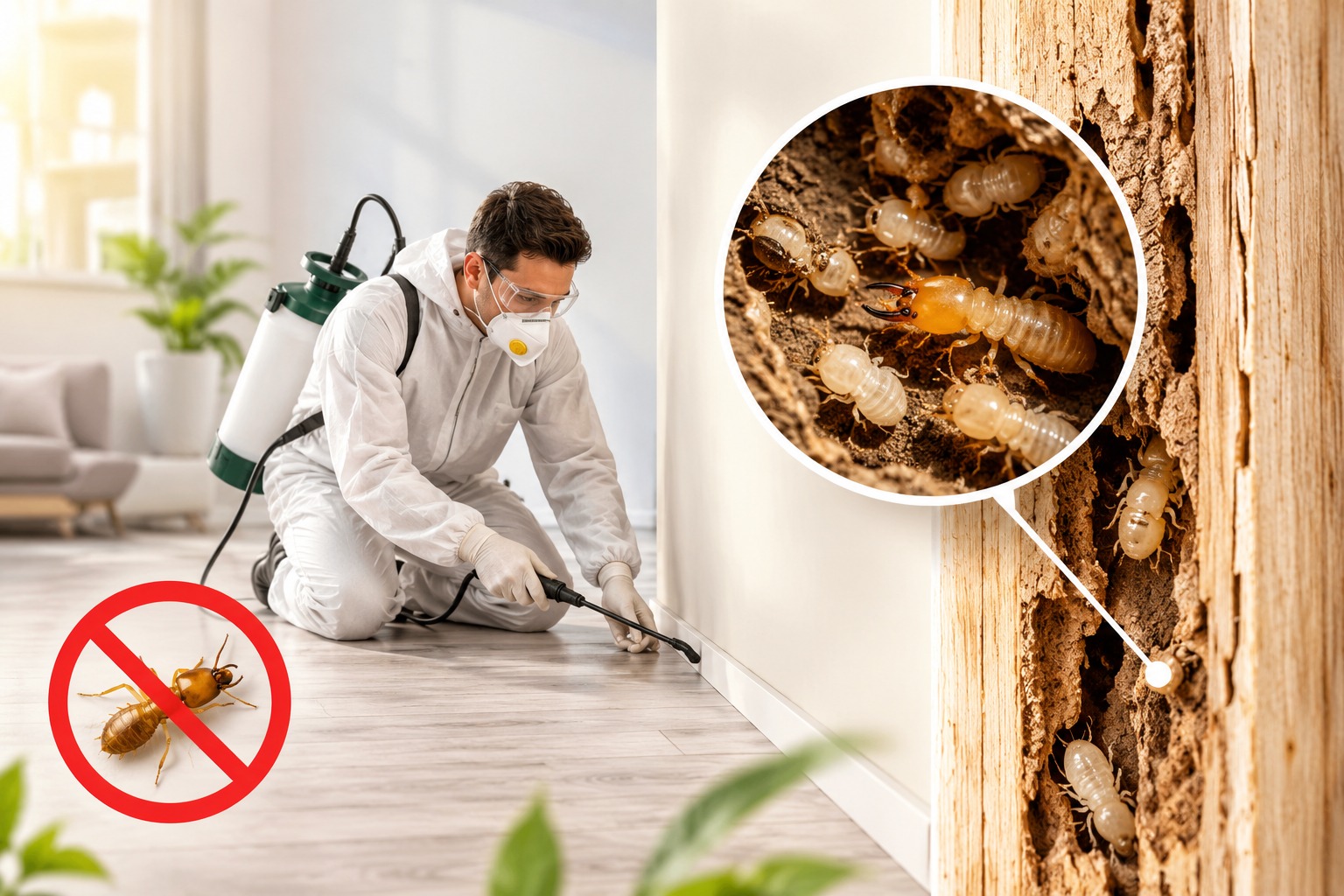
Termites are one of the most destructive pests that can silently damage homes, offices, and commercial properties. Despite growing awareness, many people still believe outdated myths about Anti Termite Treatment, which often leads to delayed action and expensive repairs later. Whether it is a newly constructed building or an old property, termites can create serious structural issues if ignored.
Understanding the truth behind these misconceptions helps property owners make informed decisions about proper Termite Control Treatment and long-term protection. Below are some of the most common myths people still believe and the real facts behind them.
What Is Anti Termite Treatment?
Anti Termite Treatment is a professional pest control process designed to prevent and eliminate termite infestations from buildings and wooden structures. The treatment creates a protective barrier around vulnerable areas and helps stop termites before they cause severe damage.
Many people think termite treatment is only necessary after visible damage appears, but professionals recommend preventive treatment because termites usually remain hidden for long periods. By the time damage becomes visible, the infestation may already be extensive.
Do Termites Only Affect Old Buildings?
This is one of the most common misconceptions among homeowners. Many believe that termites attack only old or poorly maintained properties. In reality, termites do not differentiate between old and new buildings.
Newly constructed homes often contain wooden interiors, false ceilings, modular furniture, and moisture-prone areas that attract termites. If proper Termite Control Treatment is not done during or after construction, even modern buildings can become vulnerable within a short time.
In many cases, new properties face termite issues because preventive soil treatment was skipped during construction.
Can DIY Sprays Completely Remove Termites?
A large number of homeowners rely on store-bought termite sprays thinking they offer a permanent solution. While these products may kill a few visible termites, they rarely eliminate the actual colony hidden underground or inside walls.
Professional Anti Termite Treatment works differently. Experts first identify the source of infestation, locate colony movement, and apply specialized treatment methods that target termites at their root. This approach provides deeper and longer-lasting protection compared to temporary DIY solutions.
DIY methods may provide short-term relief, but severe infestations usually require professional attention to prevent recurring damage.
Are Termites Easy to Detect?
Many people assume termites are easy to spot, but that is rarely the case. Termites are often called “silent destroyers” because they work hidden behind walls, wooden panels, and flooring for months or even years.
Some early warning signs include hollow-sounding wood, mud tubes near walls, damaged furniture, peeling paint, and discarded wings near windows. However, visible signs usually appear only after the infestation has already spread significantly.
This is why regular inspections and timely Termite Control Treatment are extremely important, especially in regions with humid weather conditions.
Are Concrete Buildings Completely Safe from Termites?
Another common myth is that concrete structures cannot get termite infestations. While termites cannot eat concrete, they can easily enter through tiny cracks, plumbing gaps, wall joints, and foundation openings.
Once inside, they attack wooden furniture, cabinets, doors, flooring, and decorative interiors. Even commercial buildings with concrete structures are not fully protected if preventive Anti Termite Treatment has not been performed properly.
Modern apartments, offices, and retail spaces can all become termite hotspots if moisture and hidden entry points are ignored.
Does One Treatment Last Forever?
Many property owners believe termite treatment is a one-time permanent solution. In reality, the effectiveness of treatment depends on several factors, including soil condition, moisture levels, construction quality, and surrounding environmental conditions.
Professional treatments are highly effective, but periodic inspections are still recommended to ensure long-term protection. In some cases, maintenance treatments may be required after a few years depending on the property’s condition.
A professional pest control expert can guide homeowners on how frequently inspections or follow-up treatments should be scheduled.
Do Termites Only Damage Wood?
Although termites mainly feed on cellulose found in wood, their damage is not limited to wooden furniture alone. They can also affect paper products, cardboard, books, storage boxes, wooden flooring, and certain insulation materials.
In severe cases, termites can weaken structural wooden supports within walls and ceilings, creating safety concerns for the building. This is why early Termite Control Treatment becomes essential for protecting both the structure and interior assets of a property.
Is Pre-Construction Treatment Really Necessary?
Some builders and homeowners skip pre-construction termite treatment to reduce initial expenses. However, this decision can become costly in the future.
Pre-construction Anti Termite Treatment creates a protective barrier beneath the building foundation before flooring and construction work are completed. This preventive approach significantly reduces the chances of future infestation and helps maintain the structural integrity of the property.
Compared to the cost of repairing termite damage later, preventive treatment is often a smarter long-term investment.
Final Thoughts
Believing termite myths can result in delayed action, expensive repairs, and long-term structural damage. Effective Anti Termite Treatment is not just about killing visible termites; it is about preventing infestations, protecting valuable property, and ensuring long-term safety.
Whether you own a residential property or a commercial space in a general location, professional Termite Control Treatment plays a major role in maintaining a termite-free environment. The best strategy is always early prevention combined with expert inspection and reliable treatment methods.
When handled professionally and at the right time, termite problems can be controlled effectively before they become major structural concerns.